
Curious how one ball can shape a match and spark debate across nations? You might think size varies with era or maker, but strict rules keep every world cup match fair. The football association sets clear specifications for weight, circumference, and material.
You’ll see famous designs like the adidas Telstar that introduced the 32-panel look in 1970. That style influenced modern soccer balls and how players handle the game today.
From the 2018 fifa world ball to current models, technology and leather choices have evolved. Still, the core specifications for an official match ball remain steady to protect play quality in every world cup match.
Key Takeaways
- The football association enforces strict rules for every world cup ball.
- Designs like the adidas telstar set lasting standards for panels and look.
- Modern balls pair leather-like materials with advanced technology.
- Size and specs stay consistent across matches to ensure fairness.
- Knowing the rules helps you appreciate each match and penalty moment.
Understanding the Official Size of Football Used in FIFA World Cup
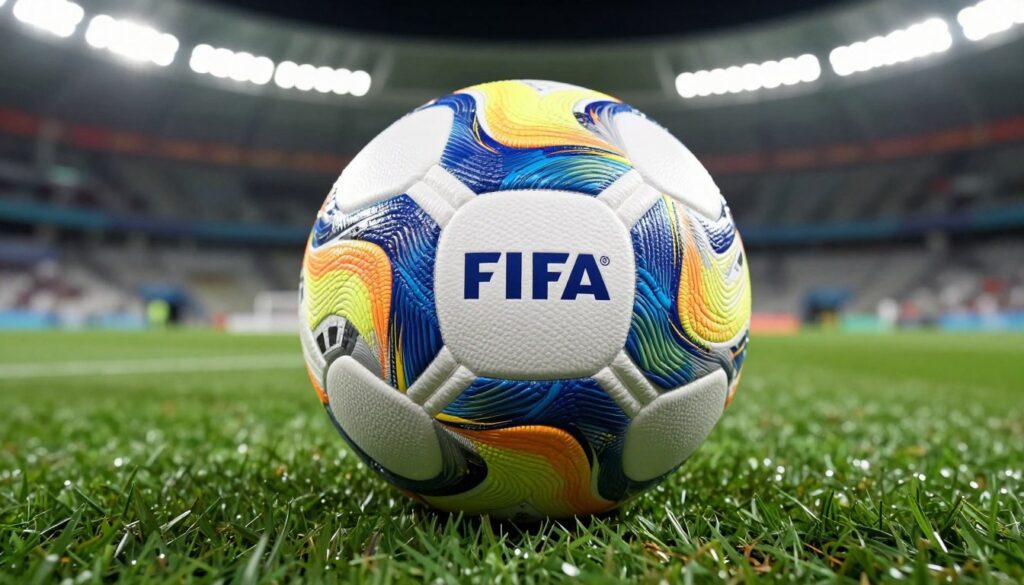
Match organizers set a strict circumference so every kick behaves predictably. Official rules require a circumference between 68 and 70 centimeters for the match ball you see at cup events.
Every official match ball must use quality leather or modern synthetic covers. That keeps feel and flight steady during intense matches.
Manufacturing matters too. About 70% of balls are made in Sialkot, Pakistan, where skilled workers stitch panels and test each ball to meet standards.
“Consistency in measurements and material ensures fairness across all matches.”
- Circumference: 68–70 cm
- Materials: Leather or approved synthetic
- Quality control: Pressure, roundness, and durability tests
| Feature | Requirement | Why it matters |
|---|---|---|
| Circumference | 68–70 cm | Ensures consistent aerodynamics for every match |
| Material | Leather or synthetic | Balances touch and weather resistance |
| Manufacturing | Sialkot (≈70%) | Skilled production and testing heritage |
| Panels / Design | Controlled layouts | Maintains shape and predictable flight |
Technical Specifications and Quality Standards
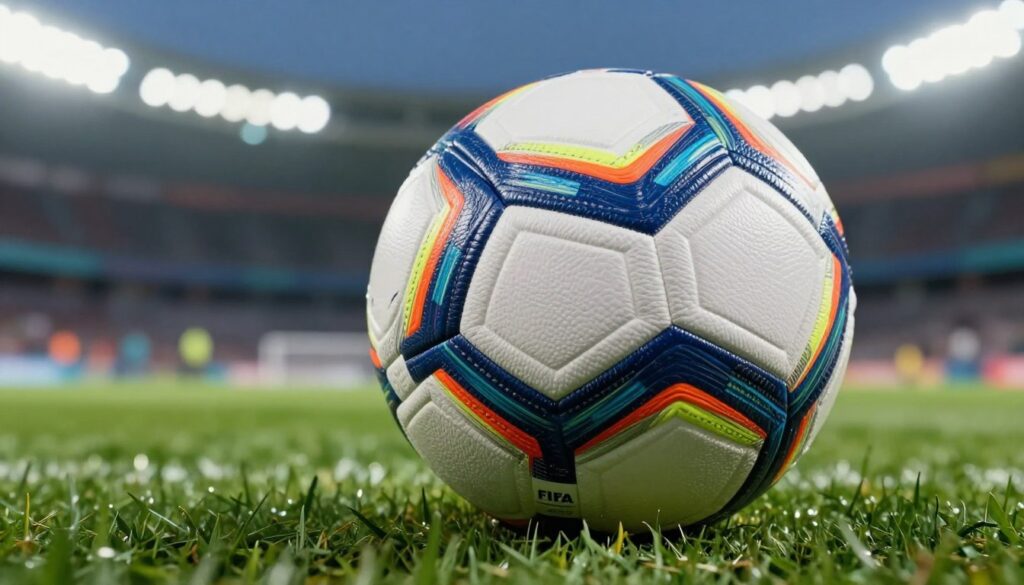
Referees and technicians confirm each ball before kickoff. You’ll see checks for mass, pressure and roundness. These tests keep matches fair and predictable.
Weight and Pressure Requirements
Weight: every ball must weigh between 410 g and 450 g at the start of a match. That range keeps touch and flight stable for players.
Pressure: internal air must sit between 0.6 and 1.1 bar at sea level. This level affects control, bounce and overall performance on the pitch.
FIFA Quality Certification
Official match balls must carry marks like FIFA Quality PRO to prove they meet strict specifications. A testing system confirms circumference, material and sphericity for top-level play.
“If a ball fails during a penalty, the referee stops play and swaps it with a certified spare.”
- Clubs and teams rely on the rules to keep consistency across matches played.
- The testing list ensures every ball used meets the standard for world cup level competition.
| Feature | Requirement | Why it matters |
|---|---|---|
| Weight | 410–450 g | Consistent touch and flight |
| Pressure | 0.6–1.1 bar | Control and bounce |
| Circumference | 68–70 cm | Predictable aerodynamics |
Evolution of World Cup Match Ball Design
Match balls evolved sharply from rough, waterlogged hides to sleek, high-tech spheres.
Early tournaments used heavy lace-up models like the T-model and Tiento in 1930. Teams sometimes could not agree and two different balls appeared in a single match.
By 1970, the adidas telstar introduced 32 panels. That pattern improved visibility and set a new standard for design.
From Leather Laces to Synthetic Panels
Manufacturers moved away from leather laces to bonded, waterproof shells. Today, balls stay round and keep consistent size and feel in rain or sun.
- 1930: T-model and Tiento, heavier and uneven in flight.
- 1970: adidas telstar, 32 panels for better tracking.
- Today: engineered panels and smart materials for steady performance.
| Era | Key change | Impact |
|---|---|---|
| 1930s | Leather, laces | Poor roundness, variable flight |
| 1970s | 32-panel Telstar | Improved visibility and control |
| 2000s–now | Synthetic bonded panels | Consistent performance in any weather |
“Design advances made every cup match fairer and more exciting.”
Modern Technology and Future Innovations
Modern match balls now carry tiny electronics that change how you experience a game. These updates keep play fair and give teams useful data. Manufacturers add sensors without altering circumference or weight.
Goal Line Technology
Goal line systems are standard at major events. They tell a referee instantly if the ball crossed the line. That cuts debates and speeds up decisions for every match.
NFC and Connectivity
The 2018 fifa world introduced an NFC chip in the adidas telstar so fans could connect via smartphones. That feature enhanced the fan experience without changing feel or panels.
The Role of VAR
For 2026, a new chip system will feed data into VAR to speed reviews. Sensors and a higher number of internal nodes help with precise tracking.
- Key benefits: faster calls, better control, and richer analytics for clubs and teams.
- All official match balls still meet football association specifications.
“Integration of chips keeps the sport modern while preserving rules and performance.”
Conclusion
Ultimately, uniform standards mean every world cup match uses a predictable, certified ball.
You’re now set to appreciate how strict specs shape play. From early leather designs to modern, sensor-ready balls, evolution kept fairness front and center.
Knowing exact measures and tests helps you see why referees swap a defective match ball without fuss. The official match ball stays the game’s key piece of gear.
Whether you follow the 2018 fifa world cup or future tournaments, these rules keep matches fair and exciting. Thanks for reading our guide on the world cup ball and its standards.