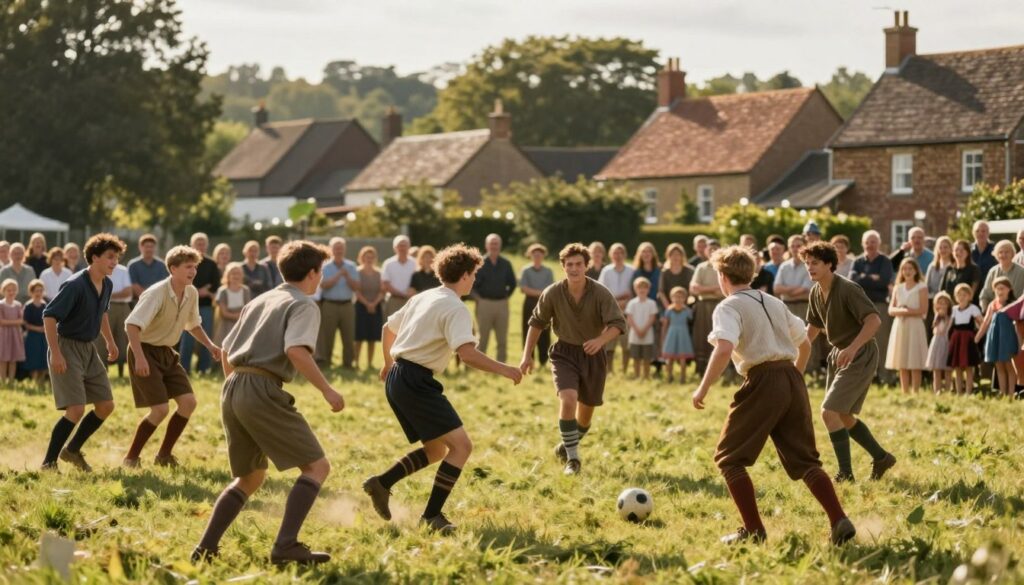
Can a simple ball game change how nations cheer, play, and unite? If you’re curious about that journey, this intro will guide you through key turns. Ancient forms of play, like Cuju in China, set early patterns. Over many years, rough medieval matches gave way to rules and organized teams.
By the 19th century, English public schools shaped unique styles. Those styles led to the Football Association in 1863 and a shared rulebook. Clubs formed, a league grew, and the modern sport spread worldwide.
You’re about to trace how players, clubs, and fans moved from chaotic street games to packed stadiums and the global World Cup. Along the way, women played an important part, despite barriers. This section maps key moments so you can follow the evolution with clarity.
Key Takeaways
- Early ball games like Cuju mark the oldest recorded roots.
- English public schools in the 19th century helped standardize play.
- The Football Association (1863) set enduring rules for teams and matches.
- Clubs and leagues professionalized the sport and expanded its reach.
- The World Cup now showcases global talent and national pride.
Understanding the Origins of Football
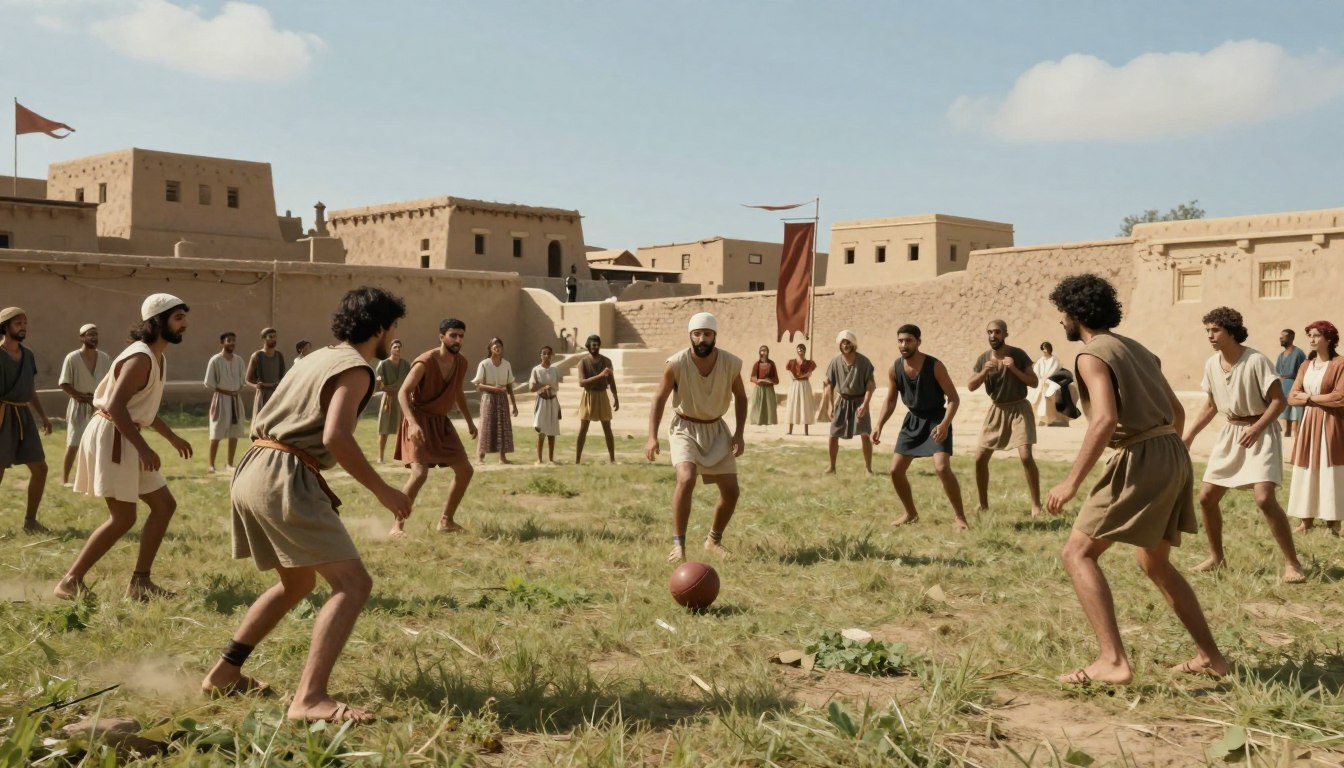
From plazas to military camps, early societies turned simple balls into shared pastimes with loose rules.
Across nations you’ll find many forms of this game. Mesoamerican players used a rubber ball in Tchatali over 3,000 years ago. Roman troops played Harpastum, a physical contest that moved a ball fast across small fields.
Early games lacked a common body of rules. That led to big variation in how teams and players behaved. Over many years, changes in the ball—from stuffed leather to air bladders—shaped passing, dribbling, and match speed.
Quote:
“Communities tuned simple play into local tradition, and those experiments birthed modern association football.”
You’re seeing how loose past rules and diverse games set the stage for clubs, leagues, and the 19th century reforms at school level. Today, soccer around the world still carries traces of those early experiments.
Ancient Ball Games and Early Precursors
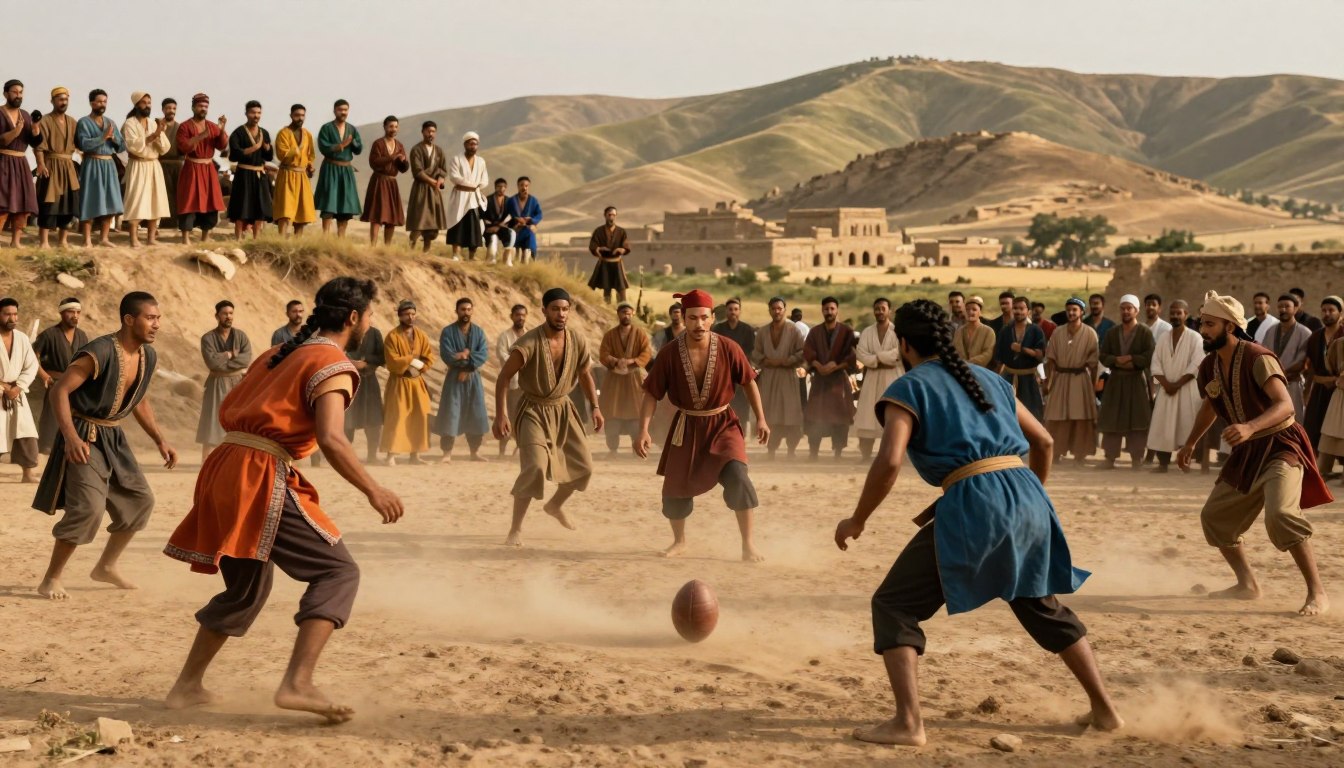
Ancient communities across Asia, Europe, and the Americas refined simple kicks and catches into skilled public contests. Those contests taught balance, timing, and teamwork that later shaped modern football and soccer.
Cuju and Kemari
In China, Cuju dates back to the Han dynasty. Players passed a ball without letting it touch the ground. FIFA recognizes this as an early form of a ball game.
Japan’s Kemari grew during the Asuka period. A circle of players kept a light ball in the air. That focus on skill echoes in later team play.
Harpastum and Roman Influence
Romans adapted Harpastum from Greek forms. This match-style contest was rough and physical. It influenced many European games and helped shape rules for running and tackling.
Indigenous Ball Games
Indigenous Australians played Marn Grook with a possum-skin ball. Native Americans in Virginia played Pahsaheman, recorded in 1610. These games show how nations used sport for ritual and training.
- Shared trait: simple rules that emphasized keeping the ball moving.
- Legacy: skills from these games fed into clubs and formal codes by the 19th century.
“Early ball play across regions built a common skillset that later teams and association codes refined.”
what is the history of football when it started?
Crowded lanes and village greens hosted rough games that tested strength more than skill.
Early English references, some from the 12th century, describe mass play that often ran wild. These matches had many players and few set rules. Local customs decided how people fought for the ball.
Over centuries, that chaos gave way to clearer expectations. Clubs, schools, and towns began to prefer a fair game that let teams compete on equal terms. The push for a standardized ball game mattered for travel and inter-club matches.
That steady shift led to association football and, by the late 1800s, to professional stadiums. Players learned set roles. Spectators moved from curiosity to passion. Today, this evolution shapes how the sport lives in India and across the world.
“From street chaos to codified play, evolution came through local needs and organized competition.”
- Medieval matches were large and often violent.
- Standard rules solved fairness and travel issues.
- The move to clubs and stadiums changed the game’s place in society.
Medieval Mob Football and Early European Traditions
On Shrovetide, villagers chased an inflated bladder through lanes and fields in massive, rough contests. These matches mixed ritual and rowdy play. They often drew entire towns into one long struggle.
Accounts like William FitzStephen’s note youths in London handling a lively ball around 1174–1183. Hundreds could join a single match. There were almost no formal rules.
Violence was common. Injuries and even deaths led kings to ban such games. In 1363, Edward III ordered prohibitions against these idle pastimes.
Goals were local landmarks. Churches, bridges, or village bounds served as targets. Teams were loose and numbers could be unlimited.
Despite bans, the passion stayed. By later centuries, urban streets and playing fields kept these games alive. That momentum helped shape organized club play and, over years, early association football.
“Rough play during festivals kept alive a tradition that later found rules and clubs.”
- Key traits: mass players, scarce rules, strong local ties.
- Legacy: a bridge from chaotic games to organized sport and leagues.
The Role of English Public Schools
School yards and cloisters became testing grounds where different styles of play met and clashed. You can see how those experiments shaped modern sport and club culture across the world.
Eton and Rugby traditions carved two clear paths. At Rugby School, students developed a running game that let a player carry the ball in hand. That turn led directly toward rugby as a separate code.
At Eton, pupils favoured a dribbling game played mainly with the feet. Those rules helped form the core skills used in later association football and soccer teams.
During the 19th century, schools began to write down rules so matches between institutions were fair. The Cambridge Rules of 1848 were an early attempt to create a shared body of rules for competing students.
Why it mattered:
- Public schools turned chaotic ball play into organized team matches.
- Different school rules — number of players, use of hands — forced negotiation between teams.
- That period of trial and error set the stage for the first football club and later league play.
“Those school rivalries and rulebooks gave players a structure that made modern association football possible.”
The Cambridge Rules and Early Standardization
A mid-19th century meeting in Cambridge began shaping shared guidelines that clubs would later follow.
Those 1848 Cambridge Rules were the first major push toward a common code for the ball game played at many schools. They set ideas about _number_ of players, limited the use of hands, and suggested a standard ball size and weight.
By 1856 a later set survives at Shrewsbury School. That copy shows how students and clubs worked to reduce confusion when teams met.
Why it mattered: these rules helped bridge rival styles from public schools. They fed directly into the creation of the Football Association in 1863 and shaped association football as a playable, fair match across regions.
“A unified code made it easier for teams to travel, compete, and grow clubs.”
| Aspect | Cambridge Rules (1848) | 1856 Copy (Shrewsbury) | Legacy |
|---|---|---|---|
| Players per side | Suggested a fixed number | Clarified team size | Helped standardize matches |
| Use of hands | Mostly forbidden | Reinforced restriction | Separated soccer from carrying games |
| Ball standards | Size and weight proposed | Recorded practical specs | Improved fair play and passing |
| Broader impact | First common code | Local adoption | Laid foundation for modern football |
- Quick takeaway: early standardization let the sport spread safely and fairly across the world.
Formation of the Football Association
A push to stop violent play and help clubs compete fairly led to the creation of a new governing body.
On October 26, 1863, delegates met at Freemasons’ Tavern in London and formed the football association.
Ebenezer Cobb Morley led the effort. He was a solicitor from Hull who drafted the first Laws of the Game at his home in Barnes.
The early code banned hacking and handling the ball during open play. That move separated running and carrying styles from association football.
Why this mattered
- The FA became the first official football body in the world.
- Standard rules meant clubs could play fair matches across years and towns.
- Player numbers and ball size began to match for every match.
“Creating one association gave teams a platform to grow and clubs a clear rulebook.”
By December 1, 1863, at the FA’s fifth meeting, many rules were final. You’re seeing how that single step turned school and local games into a codified sport that spread worldwide.
The Great Schism Between Football and Rugby
A sharp disagreement at an 1863 meeting split two visions for how teams should play.
After the FA’s fifth gathering, debate over rules for hacking and handling reached a breaking point. Blackheath’s delegate, F. W. Campbell, stood up and said,
“hacking is the true football”
then withdrew his club.
That exit formalized a split. One path prized foot skill and orderly play. The other kept running, carrying, and heavy contact. Soon, the sport from Rugby School called itself rugby while the FA’s code became known as association football.
The divide let each code grow on its own terms. Association rules limited handling and banned hacking to make matches safer and more accessible. Rugby embraced physicality and different tactically focused roles for players.
- Legacy: two global codes with distinct cultures and leagues.
- Impact: clearer identity for teams, styles, and fans across nations like India.
The Rise of Professionalism and Paid Players
Clubs in industrial towns began hiring skilled men for wages, reshaping matchday stakes and local pride.
In 1885 the Football Association officially allowed paid players under strict limits. That move let northern clubs sign talent, often from Scotland, to strengthen their side.
Working-class teams pushed this shift. They wanted to beat the amateur “Gentleman Southerners” and needed paid talent to compete.
Early rules kept balance. Professionals had to live close to their club, usually within six miles. The association watched transfers and wages to keep matches fair.
The change turned the pastime into a career. Top players became known as professors of football. Fans followed stars and clubs grew into business ventures.
“Paying players transformed local games into organized teams with real stakes.”
- Impact: working‑class clubs rose in status and performance.
- Tension: traditionalists feared pay would spoil amateur spirit.
- Legacy: association football moved toward the professional model that shapes today’s sport.
Establishing the First Football League
In 1888 a meeting led by William McGregor set a new rhythm for organized matches.
He gathered directors who wanted steady income and fewer empty fixtures. Twelve founder clubs, mostly from the North and Midlands, agreed to play each other in a season-long contest.
The new football league guaranteed matches so clubs did not lose money after early exits from cup ties. That stability let teams plan, sell tickets, and pay players more reliably.
By 1892 a merger with the rival Football Alliance created a Second Division. This step expanded membership and made promotion possible.
Why it matters: the league format turned isolated games into a championship race. It raised standards, shaped club finances, and inspired other nations to form professional football associations.
“A scheduled season gave clubs a clear path to growth and fans a reason to return each week.”
- The Football League created long-term stability.
- Clubs earned steady income and recruited better players.
- The model spread worldwide and shaped association football in the next century.
The Evolution of International Competitions
A single national cup and a handful of cross-border fixtures pushed local play into an international arena. You’ll see how early formats set standards that still matter.
The First FA Cup
The FA Cup began in 1871 as a knockout contest that drew clubs from across Britain. Early entrants like Queen’s Park F.C. showed Scottish strength and helped spread the FA code.
By staging formal matches, the cup forced teams to accept common rules. That clarity made travel and competition easier for every club.
England vs Scotland International
The first official international took place on November 30, 1872. England and Scotland played to a 0-0 draw. That fixture became an annual highlight and inspired further cross-border contests.
Outside Europe, the first non‑European international came in 1885 between the US and Canada. Such matches proved there was a huge appetite for organized football worldwide.
“Early tournaments showed fans and players that a shared code could lift local games into national passion.”
- Legacy: the FA Cup model seeded league systems and international cups.
- Impact: standardization helped association and association football spread across the century.
- Path to today: these steps paved the way for the modern World Cup and global tournaments.
Women in the History of the Sport
Women took the ball to streets and fields, claiming space to play despite social limits.
Records show an official match in Inverness in 1888 that gave early female players public notice.
By 1921 authorities banned women from many English and Scottish League grounds. That restriction lasted into the 1970s. Still, women kept forming clubs and training young players.
Progress came steadily. The first Women’s World Cup in 1991 and Olympic inclusion in 1996 pushed the game onto bigger stages.
You’re seeing a story of resilience. The same rules now guide men and women on the pitch. Today, association football features professional leagues, growing crowds, and strong national teams across India and beyond.
“Their persistence turned sidelined matches into a global movement.”
- Key point: women have been central despite barriers.
- Legacy: modern players build on a long tradition of struggle and skill.
Global Expansion and the Influence of the British Empire
Ports, mines, and rail depots became hubs where players taught others the association rules and formed new club teams. British workers, sailors, and officers carried a clear set of habits abroad. That made a local pastime easier to learn in distant places.
By the end of the 19th century, regional codes began to appear. Some nations kept close to association play. Others, like Ireland, developed Gaelic forms while rugby kept its own path.
In South America and India, locals embraced the ball fast. Links to factories and ports helped clubs form. Over time, national groups set up a football association and then a national football league to organize matches.
“A simple code moved from dockyards to classrooms and then into national life.”
- British travel spread the core rules, yet nations adapted them.
- The result: modern association football and many local variants.
- Today every continent has clubs, national teams, and a shared love for the game.
The Development of Modern Stadiums and Fan Culture
From wooden terraces to sweeping concrete bowls, venues grew to match rising fan passion.
Goodison Park, built in the 19th century, stands among the first arenas designed for regular football crowds. That move toward purpose-built sites changed how you watch a match.
By 1950 the Maracanã could hold almost 200,000 people. Giant venues made a single game feel like a national festival.
Fan culture grew with architecture. In Britain, singing came from pubs and working-class life. South America added a carnival style, with fireworks and Bengali fires lighting the stands.
- Stadiums converted matches into events that pull millions.
- Design focused on sightlines, safety, and loud atmospheres.
- These places gave every supporter a home to cheer and bring a ball-day ritual.
“The stadium became where fans made memory and identity.”
Today modern football keeps the same rules, but the live experience is unique. You’re part of a tradition that turns a simple ball contest into a shared celebration.
The Global Impact of FIFA and World Cup Tournaments
FIFA’s founding linked a handful of European associations into a single international forum. That move turned scattered rules into an organised system led by a central governing body.
How global structure changed play
In 1904 representatives from France, Belgium, Denmark, the Netherlands, Spain, Sweden, and Switzerland created this internationale football association. Today it includes 211 national associations and acts as the main governing body worldwide.
The first World Cup in 1930, held in Uruguay, set a four‑year rhythm that still draws nations together. Over decades the World Cup grew into the sport’s top prize, also known as the ultimate global tournament.
“The World Cup unites nations, celebrates skill, and shapes modern football’s identity.”
| Aspect | Start | Scope | Legacy |
|---|---|---|---|
| FIFA formation | 1904 | European founders, now 211 members | Unified international governance |
| First World Cup | 1930 | National teams from multiple continents | Most prestigious international event |
| Club competition | Champions League (1992) | Top club sides worldwide | Raised standards in professional leagues |
| Impact on India | 20th century growth | National association ties | Boosted grassroots and interest |
- Key point: FIFA and the World Cup made association football a global cultural force.
- Note: the Champions League raised club standards and global viewership since 1992.
- Result: nations large and small now chase World Cup glory and invest in domestic football association structures.
Conclusion
You’ve read how a long journey shaped modern football and its global reach. This short recap ties past moments to today and invites further interest.
From simple ball contests to written rules and committed players, progress came step by step. Clubs, leagues, and fans made the sport into a shared culture across nations like India.
Keep following matches and stories. Each season, tournament, and club moment adds a fresh page to this ongoing history. Enjoy the passion, learn from tradition, and stay curious about what comes next.