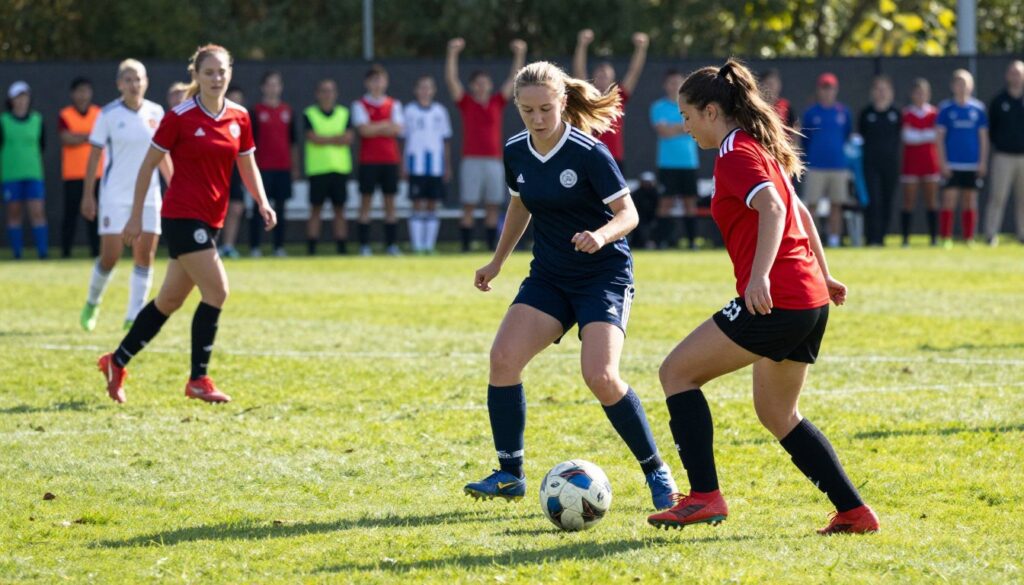
Are you surprised to learn that nearly 200 national squads now play at the international level? This guide gives you a clear, friendly view of global participation. You’ll see where the sport has grown and which nations shape the modern scene.
Since the 1880s, women have taken local matches and built an international movement. The evolution of women football is one of steady progress and rising support. Fans in India and beyond now follow leagues, cups, and national fixtures with real passion.
You’re about to get a concise, reliable list that maps teams across each continent. Our research checks current rosters and federation recognition so you can trust the numbers. Whether you’re new to the sport or tracking trends, this section sets the scene for the full breakdown.
Key Takeaways
- Roughly 200 national squads play internationally today.
- Women football grew from local roots since the 1880s.
- Our list covers teams across every continent.
- Research aims to provide up-to-date, verified info.
- Fans and new followers will find clear, quick answers.
Understanding the Global Reach of Women’s Football
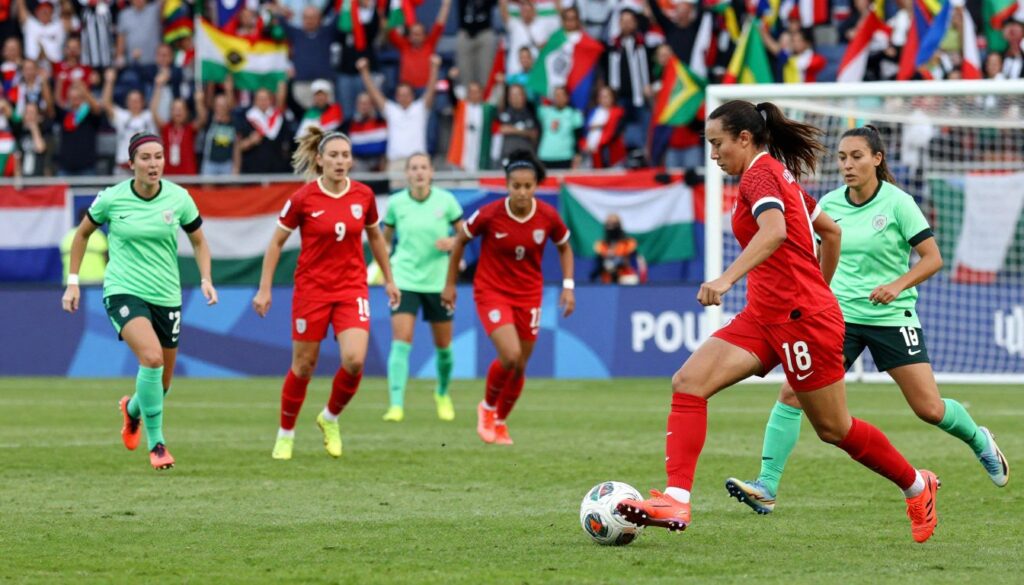
You can spot national women’s sides from Delhi to Dublin, showing how far the game has spread.
About 200 national squads now play in international competitions. That shows clear global growth. The rise is visible in grassroots leagues, university teams, and national programs.
Women football has moved beyond regional pockets into mainstream sport. Fans and players in India join others around the world to follow cups and qualifiers.
Across cultures, the game connects communities and builds shared passion. Maintaining a competitive national side takes investment, coaching, and strong domestic leagues.
- Expansion is steady and measurable.
- Local programs feed national selection.
- Support systems matter for long-term success.
How Many Countries Have a Women’s Football Team?
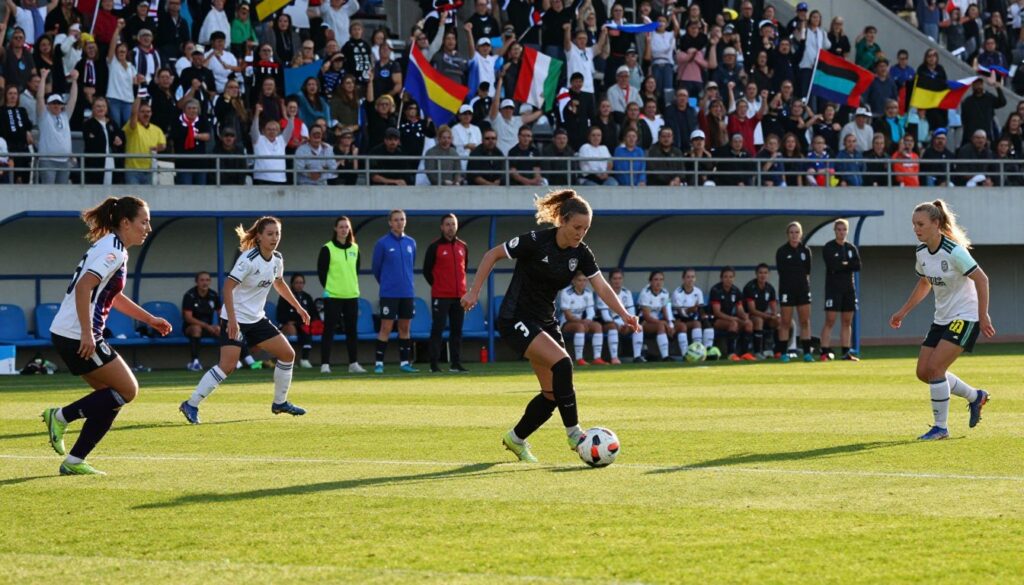
Today nearly 200 national sides lace up to play on the international stage. This count comes from current FIFA women participation data and reflects teams that compete in qualifiers and friendlies.
Current FIFA Participation Data
The fifa women rankings give you a clear account of each national football team’s form. You can follow qualifying rounds to track your favorite women national sides through the season.
Global Distribution of National Sides
Regions from Asia to Europe show steady growth. Many countries now invest in coaching, youth programs, and leagues so their football team can reach the world cup stage.
- Roughly 200 national teams are active in the women world today.
- FIFA criteria ensure each national football team meets international standards.
- The United States sets the benchmark, with four world cups and five Olympic gold medals.
Early Origins and Historical Milestones
The first international-style encounter in 1881 helped spark wider interest in women football across Britain.
In 1863, governing bodies set standard rules that cut out violent play. That change made the field safer and opened the way for more women playing organized matches.
By the 1890s, you could find local sides forming. Many games were run by a local association to show that women players belonged on the pitch.
“Those early pioneers fought social norms and proved their skill despite limited support.”
- You might be surprised that women were active in the sport so early.
- Records note the 1881 encounter at Hibernian Park as a key milestone.
- Men often frowned upon the games, yet the female side kept growing year after year.
Today, these early players are seen as the backbone of modern development. Their efforts nudged associations to slowly accept women and helped shape the world stage for future players and squads.
The Impact of Institutional Bans on Growth
Legal and institutional limits kept women from training, competing, and building steady teams. These rules left gaps that took decades to repair.
The Era of Official Restrictions
The English association banned women from club fields from 1921 to 1970. In Brazil, the Vargas regime forbade women from playing between 1941 and 1979.
What this meant on the ground
Development slowed. Clubs lost venues and regular matches vanished. Men in power often used rulebooks to block progress. Yet some clubs kept organizing friendlies and small competitions.
“Despite the bans, dedicated players and clubs kept the game alive through local fixtures and sheer will.”
| Region | Ban Years | Immediate Effect | Resulting Legacy |
|---|---|---|---|
| England | 1921–1970 | Loss of club fields and formal fixtures | Delayed league growth; stronger revival momentum after lift |
| Brazil | 1941–1979 | Legal prohibition on playing | Longer rebuilding period; grassroots activism led comeback |
| Global | 1920s–1970s | Fewer organized teams and clubs | Inspired movements for formal support and better association rules |
- Key point: bans severely hampered growth of women football teams across nations.
- Still, those restrictions sparked activism that later boosted the revival of the sport.
The Revival of the Women’s Game
The late 1960s saw new energy that helped rebuild national structures for women players. Interest after the 1966 world cup pushed groups to act.
In England the formation of the English association in 1969 gave clear, formal support. That association helped create leagues, coaching paths, and clear rules for the football team setup.
By the next year more teams returned to regular matches. Fans came back fast. The 1971 final in Mexico drew roughly 110,000 to 112,500 people and showed the sport’s wide appeal.
- Renewed structure: the new association model organised schedules and national selection.
- Growing crowds: big attendances proved demand for quality women football.
- Yearly growth: each season more squads formed and joined international fixtures.
“The 1971 final was a turning point, proving players and fans could fill the biggest stadiums.”
As you explore this revival, you’ll see how simple support and good organisation helped the women world rise from decades of neglect to lasting global momentum.
Professionalism and Domestic League Development
The shift to paid domestic leagues transformed squads from part-time projects into career paths. Professional structures gave players stable training, clearer calendars, and better medical support.
The Rise of European Professionalism
Europe led the charge toward full-time contracts. Top associations began setting standards for training, pay, and youth academies.
Sweden and the Damallsvenskan
Sweden launched the Damallsvenskan in 1988 and became the first country with a professional domestic league for women. That league set a model for club management and helped more players focus on football as a career.
Economic Disparities
Despite progress, pay gaps remain large between men and women. Some clubs can fund full-time contracts. Others still rely on part-time deals, like Italy in the 1970s when part-time professionalism first appeared.
- Impact: pro leagues boost youth pathways and international quality.
- Reality: uneven funds mean varied player experiences across each country.
- Trend: the united states and major European leagues lead the current growth of the sport.
“Professional clubs give players the space to train, recover, and aim for the world cup.”
Regional Growth in Asia and Oceania
National programs in Japan and Australia set clear examples of how leagues can lift player pathways.
The WE League launched in 2020. It was Asia’s first fully professional league. That move gave local clubs new resources and clear career routes for women.
Australia began the W-League in 2008, now A-League Women. That competition helped raise standards and links to youth systems across the region.
“Professional leagues change the pipeline: girls join clubs sooner and national squads grow stronger.”
What this means for you:
- More girls play at school and club level, then step up to pro ranks.
- National football setups now focus on coaching, scouting, and league calendars.
- Multiple teams from the region compete at high levels in the women world.
| Country | League Start | Impact |
|---|---|---|
| Japan | 2020 (WE League) | Professional contracts; clearer national pathways |
| Australia | 2008 (W-League / A-League Women) | Stronger club systems; youth link-ups and export of talent |
The Evolution of Women’s Soccer in North America
North America has built a regional model where leagues and national programs work together to lift player standards.
The National Women’s Soccer League began in 2012 with support from the United States, Canada, and Mexico. The NWSL gave players steady contracts and tougher competition.
Mexico added Liga MX Femenil in 2017. That league set new attendance records and proved strong public interest across the continent.
The NWSL and Regional Cooperation
The NWSL helped several women national sides grow by offering regular high-level matches. You can track how players improved after seasons in that competitive league.
“The NWSL structure boosted depth and gave national coaches a richer player pool.”
Club Ownership Models
Club ownership in the region often links with men’s groups. That model speeds investment and infrastructure for club and youth systems.
- United States: strong pro investment and clear development paths.
- Mexico: Liga MX Femenil draws big crowds and club backing.
- Regional effect: cross-border ties help national football plans.
Bottom line: the United States led much of this evolution, but collaboration across the continent made progress real. That teamwork helped inspire young players who now chase world cup dreams.
Modern Trends and Participation in the Twenty-First Century
Across regions, rising attendance and league launches mark a new era for women participation.
Participation is at an all-time high. A 2014 FIFA report noted clear growth in popularity and numbers at the century’s start. You can see more registered players and new clubs around world.
The sport still shows a gap versus men. Yet the trend is clear: more professional options, better coaching, and steady investment boost development.
“The Camp Nou match in 2022 set an official attendance record of 91,648, underlining rising public support.”
What this means for you:
- Higher attendances reflect growing total interest and media attention.
- New league launches create clearer pathways for women national prospects.
- Year-on-year growth points to stronger grassroots and club systems around world.
| Year | Indicator | Note |
|---|---|---|
| 2014 | FIFA participation report | Marked rising registrations and interest |
| 2022 | Record attendance | Camp Nou: 91,648 spectators |
| 2020–2024 | League growth | More professional contracts and expanded calendars |
The Significance of the FIFA Women’s World Cup
Every four years, the world cup gathers the best women sides and focuses worldwide attention on football.
Historical Tournament Records
The first tournament under FIFA took place in China in 1991. The united states won that debut cup and set an early standard for excellence.
Germany later stamped its mark with back-to-back world titles in 2003 and 2007. Those wins came against Sweden and Brazil in the finals.
Why it matters: the fifa women world cup drives investment in national football. Clubs and association programs aim to prepare players for that stage.
- The world cup is the top goal for any national football team.
- The united states remains one of the most successful sides in women world history.
- Television audiences and sponsorships have grown, lifting profiles around world.
“Every national side dreams of lifting the trophy; the world cup is the true pinnacle.”
Olympic Participation and International Standards
Atlanta 1996 marked the debut of full senior-level Olympic football for women. That moment let national squads step onto a global stage every four years.
The Olympic tournament differs from other events because there are no age restrictions for players. This rule lets each country send its strongest squad and showcase top talent.
You’ll find the Games give every team rare exposure to new tactics and pressure situations. Olympic matches often speed up learning for players and coaches alike.
- Global platform: the Olympics raise visibility for women football and boost media attention.
- No age cap: full senior squads compete, so experience counts more than youth limits.
- Growth signal: since 1996, more teams from every region qualify and gain confidence.
- Practical gain: Olympic play sharpens form for later world cups and qualifiers.
For fans in India and beyond, Olympic participation shows how national structures can improve quickly. The Games remain a special, high-stakes stage for women players and their football team ambitions.
Challenges Facing Female Players and Coaches
Female coaches still struggle for representation in several top European leagues. This gap affects how teams develop talent and who leads training sessions. You’ll notice fewer women in backroom roles and on the touchline.
Media coverage and pay remain major hurdles. Many viewers cannot tell professional women matches from men’s games due to low visibility. That harms sponsorship, broadcast deals, and fan growth in each country.
On the ground, the number of female coaches is low. That limits role models for young players and slows tactical progress. It also makes it harder to build stable coaching paths in any country.
- You will learn that players and coaches face many obstacles on this list of concerns.
- It is important to account for fewer opportunities versus male peers in several places.
- Media coverage, pay, and coaching counts are central issues that need attention.
“Addressing these gaps is the clearest way to lift standards for every football team and player.”
Conclusion
This guide wraps up the journey from early matches to today’s professional leagues. ,
You’ve seen the sport grow through steady investment and better coaching. Local clubs fed national programs. New leagues and the World Cup lifted interest and standards.
Challenges remain. Pay, coverage, and coaching gaps still limit progress. Yet passion and support keep driving change. You now understand key shifts in institutions and culture that shaped the modern scene.
Thank you for reading. Keep following the progress — the future looks bright for players and fans across India and beyond.