Can one piece of equipment change your game? If you play regularly in India, choosing right gear shapes how you perform.
Our guide cuts through a crowded market. We compare trusted brands and recent product tech. You get clear advice that fits your style and budget.
We look at materials, balance, and feel. We also cover turf shoes for match day comfort. This helps you pair a stick with the right footwear and kit.
Years of hands-on testing back our picks. You’ll find options for power hitters and those who value control. Expect honest notes on durability and value.
Key Takeaways
- Choosing the right stick and shoes boosts performance on the field.
- Material and balance matter more than brand alone.
- We review top brands and market trends for clear buying choices.
- Short, practical tests reveal durable product picks.
- This guide helps you match gear to your playing style and budget.
Understanding the Anatomy of a High-Performance Stick
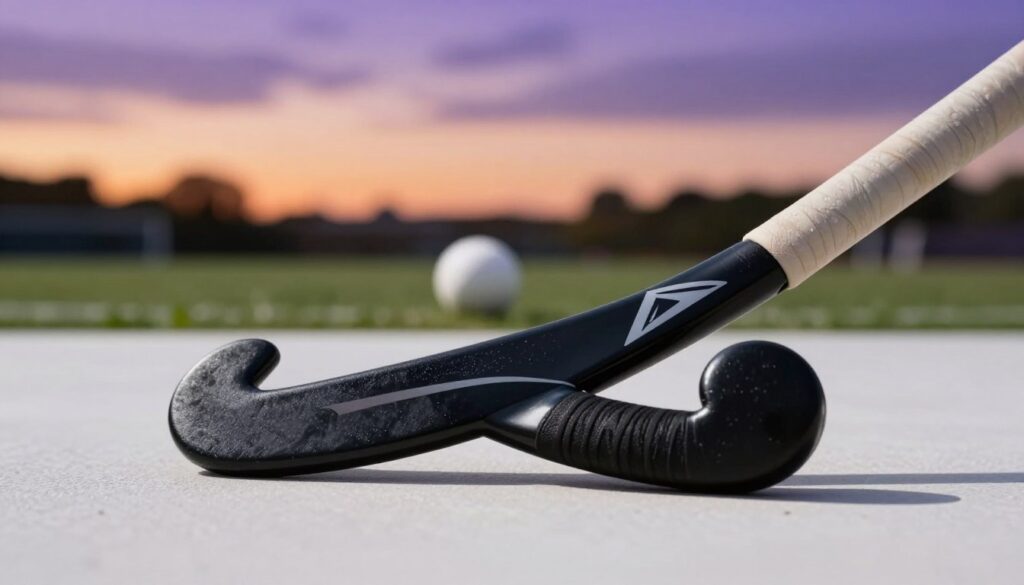
Understanding how a stick is built changes how you play on turf.
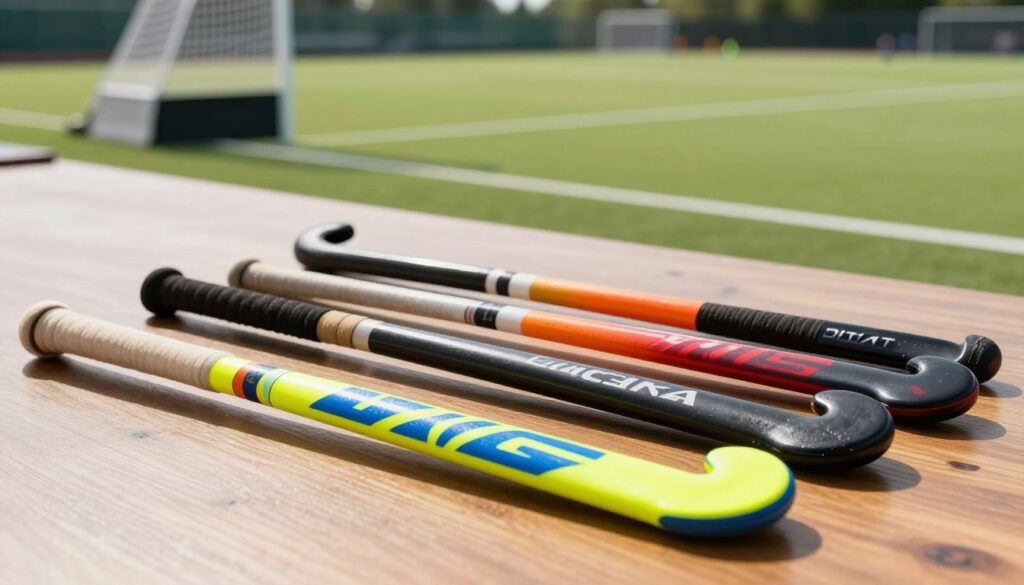
Material choices define feel and power. Sticks with 90–100% carbon suit advanced players who want maximum power transfer and a stiff response. Lighter models (≤520g) help attackers gain quick speed and agile handling.
Balance point matters as much as weight. A lower balance point toward the head gives better touch when receiving and shooting. A higher balance point near the handle improves quick turns and close control.
Quick checklist
- Carbon content influences power and durability.
- Weight and balance change how you control the ball across the field.
- Bow shape and grip affect technical skills like drag flicks and lifts.
- Pick a size that fits your height and playing level for best results.
| Feature | Effect on Play | Who benefits |
|---|---|---|
| 90–100% carbon | Maximum power, stiff feel | Elite attackers and strikers |
| Weight ≤520g | Faster stick speed, nimble skills | Quick forwards and dribblers |
| Lower balance point | Enhanced touch and shot feel | Players needing soft control |
| Higher balance point | Improved maneuverability | Defenders and midfielders |
What is The Best Field Hockey Stick in The World?
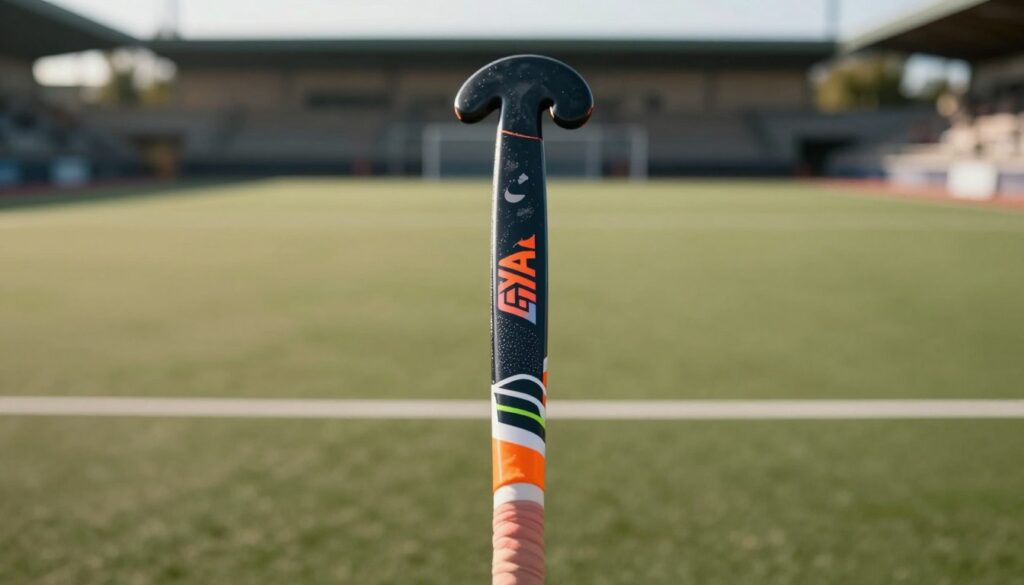
Picking a single top model means matching gear to how you play. You should weigh position needs first. Attackers, midfielders, and defenders ask for different feel and balance.
The Mercian Elite CKF90 Ultimate White Face Edition stands out for weight distribution and a late bow. That design helps drag-flickers find extra whip and control during fast plays.
We test sticks under match pressure. Our reviews focus on power, touch, and repeatable performance during training and tournaments.
“Find a stick that gives consistent power and control; your role on the field will tell you what to pick.”
- Match stick balance to your position for best results.
- Look for late bows if drag-flicking or hard hitting is key.
- Evaluate durability and feel across long sessions.
| Feature | Benefit | Who should consider |
|---|---|---|
| Late bow | Improved flick mechanics | Strikers and drag-flick specialists |
| Balanced weight | Stable control and power | All levels seeking consistency |
| High carbon mix | Sharper power transfer | Advanced players needing punch |
Finding the right product is a personal journey. Use data on balance, bow, and feel to pick what helps you win on turf in India.
Top Picks for Attacking Forwards
For attacking forwards, gear choice shapes how chances turn into goals. You want a tool that frees creativity and adds bite to every shot.
The Advantage of Late Bows
Late bows shift the sweet spot forward. That gives better leverage for flicks and deceptive slaps.
The Grays GR9000 Probow uses a unique late bow. Forwards use it to 3D skill, drag with control, and craft tricky finishes.
The Grays DB10 is popular with international players like Fiona Crackles and Tess Howard. It delivers raw hitting and slapping power thanks to tuned carbon mixes.
- Forwards need explosive power and a precise bow shape for quick releases.
- DB10 suits players who favour strong hits and reliable slaps.
- GR9000 Probow helps you execute 3D moves and drag flicks with accuracy.
- Higher carbon gives stiffness needed at a pro level.
| Model | Key Advantage | Best for |
|---|---|---|
| Grays DB10 | Powerful hitting and slapping | Strikers who need raw power |
| Grays GR9000 Probow | Late bow for 3D skills and drag | Creative forwards and flick specialists |
| Carbon-tuned options | Enhanced stiffness and response | Players seeking pro-level performance |
“Mastering the drag flick needs a stick with a specialised bow; pick one that feels right in your hands.”
Reliable Equipment for Defensive Specialists
A reliable back-line setup begins with a stick you can trust every clear.
As a defender, you’re after consistency over flash. Predictable touch helps you pass under pressure. That steady feel also reduces risky errors when opponents press.
The Adidas Fabela .3 Kromaskin earns a top spot for 2024. It balances carbon to give even distribution without losing first-touch feel. That mix makes the model useful for long clearances and short, accurate passes.
Good gear must match your turf shoes so you stay stable during tackles and interceptions. Look for sticks that deliver measured power on clears but keep control for build-up play.
- Balanced carbon for predictable response.
- Durable construction for long seasons.
- Design that supports passing distance and control.
“Choose kit that helps you distribute the ball cleanly and stay steady on your feet.”
| Model | Key trait | Who benefits |
|---|---|---|
| Adidas Fabela .3 Kromaskin | Predictable balance, tuned carbon | Defenders needing steady clears |
| Durable control series | Reinforced toe and shaft | Players in heavy-contact leagues |
| Stable-pass models | Even weight distribution | Back-line players focused on passing |
Midfield Sticks Designed for Superior Control
Midfield play demands a tool that feeds your next decision before it happens. You need a stick that gives instant feedback on touch and lets you think one move ahead.
First Touch Feedback
Y1 GLB 70 shines here. It gives clean, crisp feedback when you trap or receive under pressure. That reliable feel helps you set up fast passing and keep possession.
The Y1 LB X pairs that feedback with 3D skill support. It helps with first touch, ball carry, and tight control during runs through traffic.
Maneuverability
Balance point matters for quick turns. The Y1 LB X offers a centred point that aids rapid ball movement and close dribbling.
Good grip and consistent feel let you execute crisp passing and neat carries. Midfield players benefit from sticks that let them switch play without thinking twice.
“A midfield tool should make the game feel slower for you and faster for opponents.”
- Superior control keeps possession in tight areas.
- Y1 GLB 70 helps trap and prepare the next pass.
- Y1 LB X supports balance, 3D skills, and smooth carries.
| Model | Key trait | Who benefits |
|---|---|---|
| Y1 GLB 70 | First touch feedback | Playmakers who pass under pressure |
| Y1 LB X | Balanced point for maneuvering | Midfielders who carry and dribble |
| Control-focused sticks | Consistent grip and feel | Players needing tight ball control |
Evaluating Carbon Content and Power Profiles
A stick’s carbon make-up tells you what kind of punch and feel to expect on turf.
Start by checking carbon content. High numbers mean more stiffness and sharper power transfer. That suits advanced players at an elite level who have refined technique and timing.
90–100% carbon gives maximum power for long passes and heavy hits. It also makes the shaft less forgiving, so you need clean technique to get consistent results.
Modern technology changes the trade-off between stiffness and feel. The Grays AC Series uses Aerocore technology to add stiffness while keeping touch. That helps you generate power without losing necessary control.
“Match carbon profile to your skill and body to use power efficiently.”
- Carbon content and bow shape work together to set the power profile.
- Higher carbon suits long-range power; lower mixes favour feel and control.
- Pick a setup that fits your level and playing style for best results.
| Carbon mix | Power profile | Who benefits |
|---|---|---|
| 90–100% | High power, stiff response | Elite attackers and long-passers |
| 70–89% | Balanced power and feel | All-round players and midfielders |
| <70% | Soft feel, more control | Beginners and skill-focused players |
The Importance of Bow Shape and Weight Distribution
Bow profile and weight tune how your skills show up during matches.
Bow shape matters most when you learn drag mechanics and lifts. A low curve moves the contact point forward. That helps you load and whip the ball during a drag.
The Jumbow-S shape does this while keeping the stick easy to carry and pass. You get simple passing and clean hitting plus an ultra-low bow for consistent drag flicking.
Drag Flicking Mechanics
Balance and weight work together in a flick. Lighter models raise stick speed. Heavier sticks (530–560g) add hitting power and stability for defenders.
Choose the right size and weight for your level. A well-placed balance point makes technical moves repeatable under pressure.
- Bow shape defines where you contact the ball for lifts and 3D skills.
- Weight distribution affects acceleration and raw power during clears.
- Advanced shapes like Jumbow-S boost passing accuracy and control on the field.
“Top international players pick specific bow positions for consistent power and repeatable technique.”
Finding Value for Money in the Current Market
In today’s market, a clever buy stretches your budget across gear.
Look past hype and check core specs. Focus on carbon mix, feel, and build. That tells you if a hockey stick gives true performance for the price.
TK Black Elephant is a clear value pick. It retails at a price of £55 now, down from £150. That drop leaves room in your budget to buy shoes and other equipment.
- Choose sticks with solid carbon content for steady power and durability.
- Match bow and size to your role so touch and control stay reliable.
- Compare brands to avoid overspending on marginal gains.
“A great stick should give consistent feel and power, whatever its price.”
| Key factor | Why it matters | How it saves you money |
|---|---|---|
| Carbon | Determines power and lifespan | Higher durability lowers replacement cost |
| Bow & size | Sets control and flick ability | Right fit reduces training time and wasted buys |
| Price | Immediate cost to you | Smart picks free funds for shoes and kit |
You’re aiming for balance: solid performance without sticker shock. Start with trusted models like the TK Black Elephant and spend saved cash on good shoes to complete your setup.
Conclusion
Your next purchase should solve a specific gap in your game.
Selecting the best hockey sticks requires balancing personal taste, position needs, and clear specs like carbon content, bow shape, weight, and balance. Decide which trait matters most for you before you buy.
Whether you play forward, midfield, or defence, the right sticks improve performance and make practice more productive. Think about the feedback you need from a tool and match that to tested models.
Investing in quality gear is an investment in growth. Revisit our top picks and pick one that suits your level and budget for the season ahead.