Curious which female side first stepped onto a pitch centuries ago? That question pulls you back to village greens and old newsprint from 1745. A report in The Reading Mercury hints at women playing public matches long before modern tournaments existed.
You’re about to trace a story that links humble games to today’s global stage. Early matches set a path that led to England hosting the first women’s world cup in 1973.
The journey shows how women pushed past social limits. Small teams grew into organized sides. Over time, those efforts shaped the wider cricket world and gave rise to the cricket world cup we watch now.
Key Takeaways
- Early reports from 1745 record women playing public matches.
- Village games laid the groundwork for organized women’s sides.
- England hosted the first women’s world cup in 1973.
- Persistence by early players shaped today’s global events.
- Understanding this history deepens appreciation for modern teams.
The Earliest Recorded Matches in Cricket History
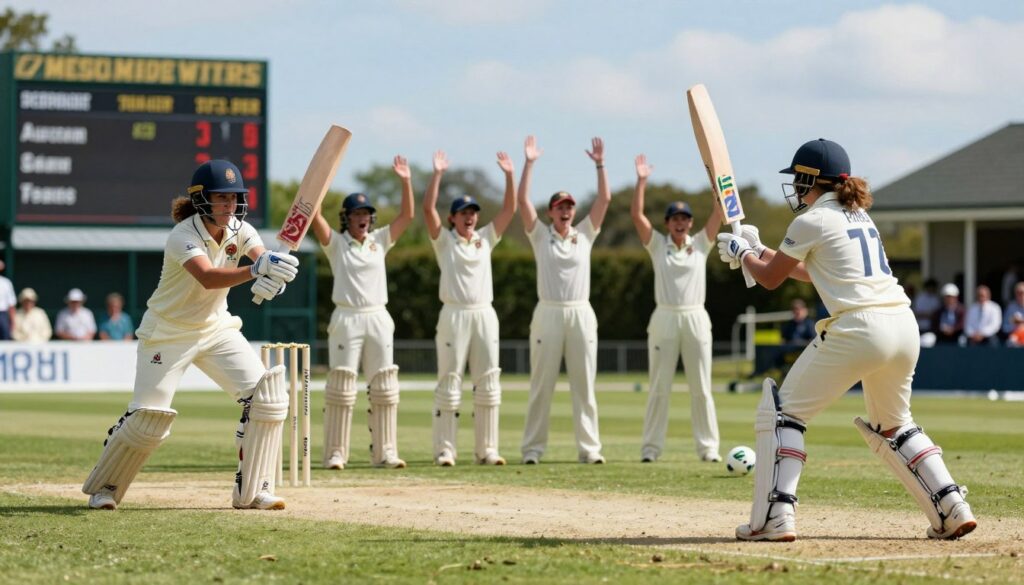
A July day in 1745 near Guildford marks one of the clearest early accounts of organized women playing cricket.
The Bramley and Hambledon Match
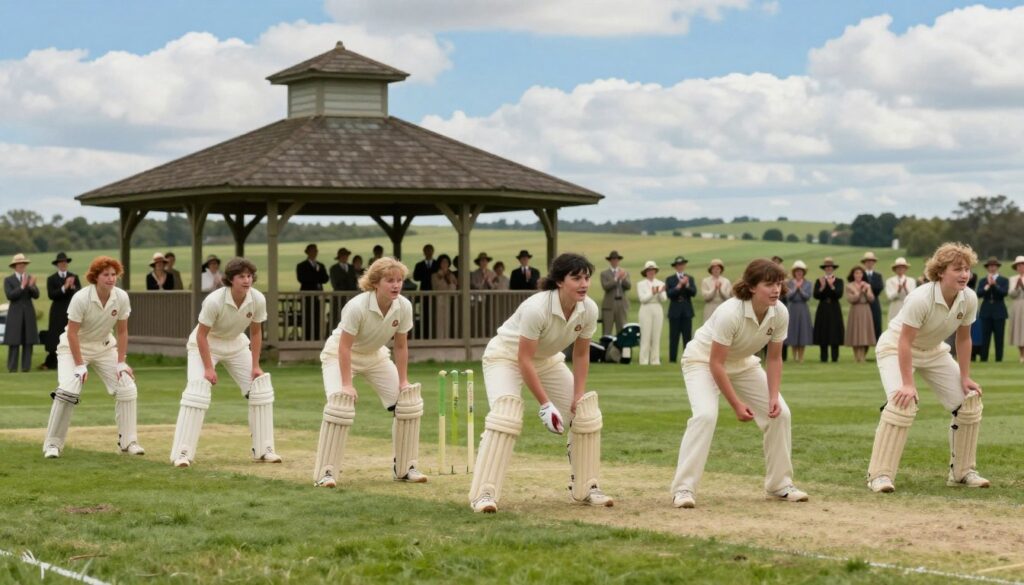
On 26 July 1745, Bramley and Hambledon met for a noted contest. Bramley maids scored 119 notches. Hambledon maids finished on 127.
Reports from those years praised skill. Observers said these women bowled and batted as well as many men. For many spectators, it was the first time they saw organized women cricket on a public green.
Early Crowd Dynamics
Crowds gathered in large numbers. Heavy betting often surrounded the final outcome. Spectators of both sexes turned up to watch.
- Cornerstone match: Bramley vs Hambledon helped shape history women hold in cricket.
- Public impact: These teams proved organized play could draw interest across years and regions.
- Rough moments: Later events, like the 1747 Artillery Ground incident, showed crowd tensions could flare.
You’re seeing how early matches set a competitive tone for the cricket world and laid roots for the modern game.
Who Was the First Woman’s Cricket Team in the World
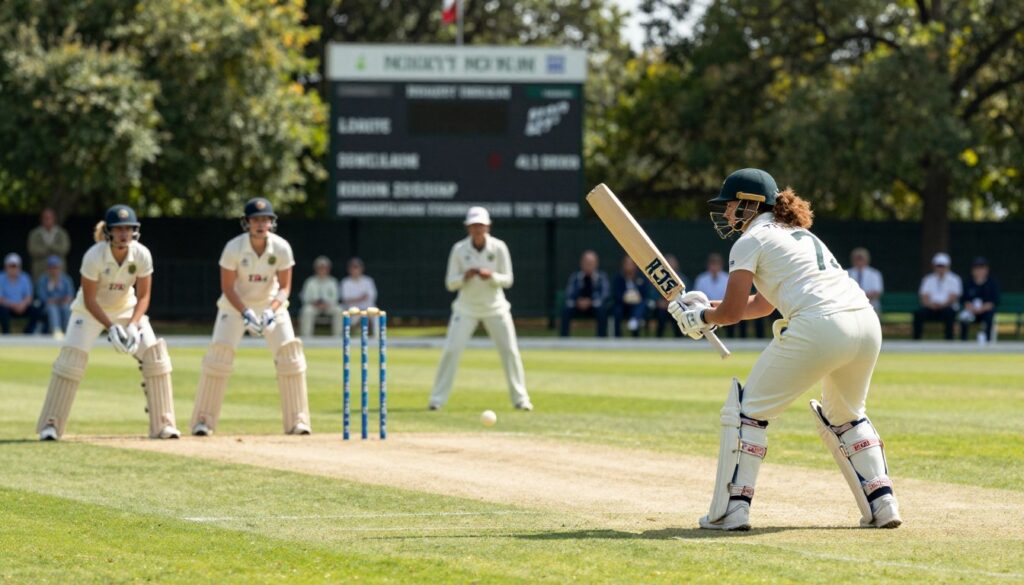
Historic records point to a few early clubs that helped turn casual play into formal competition.
Lily Poulett-Harris led an Oyster Cove side in 1894 that many historians name among the earliest organised teams in the colonies. That side stood out for regular fixtures and local rivalries.
The rise of the Women’s Cricket Association in 1926 marked a clear shift. It brought rules, fixtures, and a framework that linked local clubs to national bodies.
You’re looking at a story where several early groups, not a single unit, created momentum.
“Early clubs and captains laid the groundwork long before national finals and wide recognition.”
- Oyster Cove, led by Poulett-Harris, is often a top contender for early organised status.
- The 1926 association helped standardize play and expand women cricket across regions.
- Many late-19th-century teams fed talent and interest into the growing cricket world.
Bottom line: identifying a lone first side is complex. Still, Oyster Cove and the later formation of a cricket association together explain how early ambition became lasting structure.
The Rise of Organized Women’s Cricket Clubs
Organized clubs in late 19th-century Yorkshire changed how women approached competitive play.
The White Heather Club
The White Heather Club was formed in 1887 at Nun Appleton, Yorkshire. That club became a model for how a women cricket club could train players and host regular matches.
Touring sides helped boost interest. In 1890, the Original English Lady Cricketers toured England and drew large crowds with exhibition fixtures. These tours showed that a cricket team led by women could attract fans and press.
You’re looking at a time when each cricket club formed added structure. Clubs gave coaching, local competition, and a path toward national women competition.
- Club formed: White Heather is a prime example of an early women cricket club formed in Yorkshire.
- Infrastructure: Every club helped build systems that fed into a women cricket association.
- Competition: Fierce local rivalry often served as the final proving ground for aspiring national women players.
“These early clubs proved that women could compete with intensity and draw public support.”
International Expansion and the First World Cup
Cross-continental tours and organized events moved women from local greens to global arenas.
The first international tour came when an England side visited Australia in 1934–35. That trip showed international women cricket could be sustained over long years and travel.
The inaugural world cup arrived in England in 1973. This cricket world cup brought teams from New Zealand and the West Indies together. The final standings confirmed England as an early dominant side.
Global coordination intensified after 1958, when the International Women’s Cricket Council formed. The council linked national women cricket bodies and helped expand play to South Africa, Sri Lanka, India and others.
- 1934–35: England first international tour to Australia.
- 1958: Formation of women cricket council for global coordination.
- 1973: First cricket world cup held in England with New Zealand and West Indies entries.
| Year | Event | Key Teams | Impact |
|---|---|---|---|
| 1934–35 | England tour to Australia | England, Australia | First sustained international fixtures; boosted test match status |
| 1958 | International council formed | National women cricket bodies | Coordination for fixtures and rules |
| 1973 | Inaugural world cup | England, New Zealand, West Indies | Global competition platform; final solidified early hierarchies |
| 1970s–80s | Expanded participation | South Africa, Sri Lanka, India | Broadened reach across continents; fed national women programs |
“These tours and tournaments laid the groundwork for the professional structures you see in modern international women cricket.”
Key Milestones in Women’s Cricket Performance
Milestone performances have repeatedly rewritten expectations for women cricketers.
Betty Wilson set a high bar in 1958 by scoring a century and taking ten wickets in a single test match. That feat still ranks among the most remarkable performances in test match history for women.
Kiran Baluch raised batting standards with 242 for Pakistan against West Indies in 2003/04. That innings remains one of the highest individual scores in a long-format international for women.
You’re seeing how players from New Zealand, South Africa, and Sri Lanka also pushed limits. Their achievements helped teams lift standards at national and international levels.
- Championship impact: national women cricket championship fixtures often reveal breakout stars.
- Inspiration: Indian women and young cricketers across cricket india look up to these landmark displays.
- Finals and legacy: match finals often showcase record partnerships and decisive bowling spells.
“These standout feats turned individual glory into lasting momentum for teams and programs.”
| Year | Player | Achievement | Impact |
|---|---|---|---|
| 1958 | Betty Wilson | Century + 10 wickets (Test match) | Raised standard for all test match women cricketers |
| 2003/04 | Kiran Baluch | Score of 242 | One of the highest individual totals; inspired batters globally |
| 1990s–2000s | Various NZ, SA, SL players | Record partnerships and striking bowling spells | Broadened competitive depth across regions |
Modern Evolution and the Role of the ICC
When cricket’s main council embraced women’s governance in 2005, opportunities expanded fast.
The ICC Women’s Cricket Committee formalized oversight in 2005. That move folded the earlier women cricket council into a global body. It sped professional growth and funding.
ICC initiatives boosted the profile of the cricket world cup for women. England’s 2009 world cup victory marked a milestone. It was the first ICC title won by England at any level.
You’re seeing clear results. Modern competition in India, New Zealand, and South Africa rose fast. National boards invested in coaching, domestic championships, and international tours.
“Final stages of ICC women tournaments now draw millions and shape careers.”
- Impact: Better schedules, pay, and media coverage.
- Reach: New teams and stronger test match programs.
- Future: More pathways for indian women and others across years ahead.
| Year | Action | Effect |
|---|---|---|
| 2005 | ICC women committee formed | Professional structure; global coordination |
| 2009 | England wins world cup | Raised visibility for ICC competitions |
| 2010s–2020s | Board investments (India, NZ, South Africa) | Stronger domestic leagues; better international teams |
Conclusion
From village greens to global stadiums, you’re seeing a rich story women cricket has written over centuries. Small clubs, bold captains, and steady fans built pathways that led to organized leagues and major finals.
Through simple fixtures and later formal bodies, local effort grew into national programs. You have seen how clubs and associations set rules, training, and schedules that helped players flourish.
The story women tells is one of resilience and rising skill. New generations keep adding chapters. The sport’s next final moments will reflect that long march toward greater equality and recognition.