Surprising fact: since the IIHF set up its ranking system in 2003, the United States men’s side has accumulated 3,985 points, a figure that shows how tight global competition has become.
You’re likely trying to cut through complex world rankings to find a clear answer. The International Hockey Federation — the hockey federation — keeps a running list that tracks every national performance.
The hockey federation uses data from major events to build a transparent ranking. This helps fans and analysts spot who leads and why.
We walk you through how the hockey federation evaluates play, what the ranking numbers mean, and which teams rise or fall over time.
Below, you’ll get a tidy list and clear context so you can follow your favorite team as they chase international prestige.
Key Takeaways
- The IIHF ranking system began at the 2003 congress and guides current standings.
- The United States currently holds 3,985 points in world rankings.
- The hockey federation compiles data from many events to rate teams fairly.
- Rankings help you track national form and tournament prospects.
- This section sets up the list and analysis that follows.
Understanding the Global Landscape of Professional Hockey
If you follow international play, the IIHF formula explains why certain nations sit near the top.
The International Hockey Federation set this system at the September 2003 congress. Since then, every major tournament result feeds into a four-year cycle of points. Gold medal winners earn 1600 points, creating a clear hierarchy for teams and seeding.
The IIHF Ranking Formula
The hockey federation weights recent performance higher while still valuing past success. This balance keeps world rankings stable but responsive.
- The formula tracks results across a four-year window.
- Every tournament finish adds to a nation’s points total.
- Seeding uses those totals so matchups stay fair.
| Metric | Description | Example | Effect |
|---|---|---|---|
| Base points | Points awarded per placement | 1600 for gold | Creates hierarchy |
| Cycle | Four-year aggregation | Recent results weighted | Reflects form |
| Seeding | Use of totals for draws | Top seeds avoid each other early | Fairer tournament play |
| Transparency | Simple formula fans can follow | Public rankings | Better context for fans |
Understanding this process helps you see why some teams reappear at the top and how nations climb the ladder.
What is the Best Hockey Team in the World Right Now?
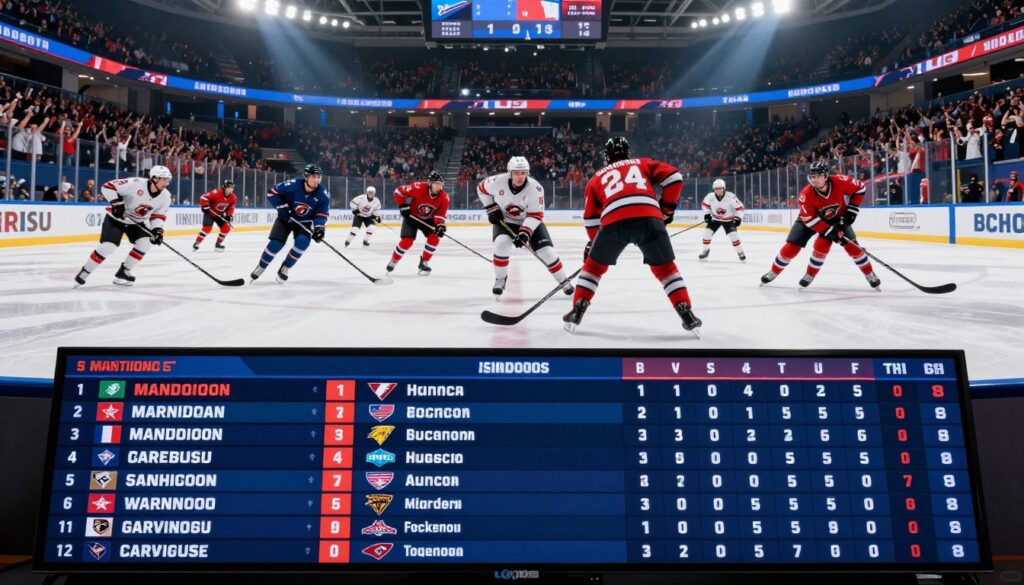
The points ledger highlights which men’s programs dominate recent tournaments.
Men’s National Team Standings
United States tops the list with 3985 points. That total reflects steady finishes across major events and strong tournament results over the four-year cycle.
Smaller federations also appear in the rankings. For example, Hong Kong holds 2055 points as it builds depth and exposure at international events.
Impact of International Suspensions
Russia remains excluded from the hockey federation list due to suspension. That absence shifts seedings and alters the competitive picture for many nations.
The hockey federation uses a clear formula to weight recent performance and past form. Every tournament point matters when teams chase higher placement on this list.
| Nation | Points | Effect on Rankings |
|---|---|---|
| United States | 3985 | Leads seeding; benefits from consistent results |
| Hong Kong | 2055 | Developing program; climbing through tournament play |
| Russia (excluded) | — | Suspension removes a top competitor and reshapes draws |
- The hockey federation keeps this list transparent and data-driven.
- Every tournament result adds or subtracts points that move teams up or down.
- Suspensions change matchups and open chances for other nations.
Top Women’s National Hockey Programs
Top women’s programs now reflect long-term development plans and steady tournament success.
United States women’s side sits at 4150 points. That lead shows depth across age groups and pros. You can track results as each event adds or subtracts points.
The hockey federation tracks women’s squads with the same rigor used for men’s. Every tournament gives teams a chance to move up in rankings on the official list.
Follow your favorite squad as they chase spots on that list. The hockey federation recognizes growth across nations. This support helps more teams reach higher levels on the world stage.
- Points reflect multi-year performance and recent form.
- The federation updates its ranking after each sanctioned tournament.
- Maintained transparency helps fans compare team progress.
Bottom line: the hockey federation keeps a clear list so you’re never guessing who leads global play.
Analyzing Elite Performance in International Tournaments
Big tournaments give a clear window into which teams earn points and momentum.
Olympic Qualification Standards
The 2026 Winter Olympics in Italy showed how the hockey federation turns performance into qualification.
Canada earned the 1st seed for the Olympic tournament, a direct result of high points across recent events.
The Role of NHL Talent
Top NHL players change outcomes. When pros join national squads, men’s matches often tilt toward experience.
That impact shines in playoff-style games, where single results shift the points each nation carries into future draws.
Recent Tournament Results
Every tournament result in Italy adjusted the official totals. Even developing programs, like Hong Kong, are part of this system.
- The hockey federation uses a clear formula to convert finishes into points and seeding.
- Strong showings by pros raise a team’s points quickly.
- You can track how each tournament reshapes ranking and opportunity.
| Metric | Example | Effect |
|---|---|---|
| Points awarded | Olympic seed | Determines qualification |
| Player pool | NHL participants | Boosts tournament results |
| Development | Hong Kong | Long-term ranking growth |
Conclusion
Here’s the main takeaway: a transparent points model keeps international standings fair and useful.
The hockey federation applies a steady system so every tournament result matters. This approach turns match outcomes into clear rankings you can trust.
If you follow men or women’s circuits, that official list helps you spot shifts in form and depth. Each national effort earns points and moves up or down on world rankings.
Use this guide to read results with confidence. With a repeatable method and public totals, the hockey federation makes it easy to see which team leads and why.