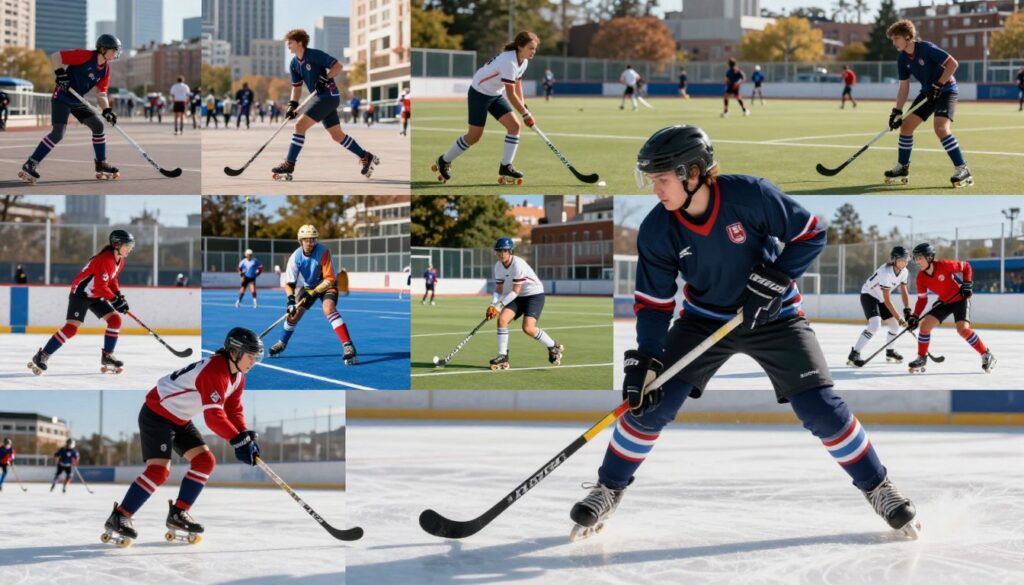
Have you ever wondered which stick sport evolved from an old French word and now fills fields, rinks, and gyms across the globe?
The word hocquet gave birth to the name that many fans know today. This family of stick sports asks two teams to move a ball or disk toward a goal. You see it played outdoors on grass, on sheets of ice, and inside indoor gym floors.
Whether you cheer for field play or ice action, knowing the variety helps you value the game more. The story stretches from the 19th century to the present. Each shift in rules and gear created new versions for players to enjoy.
This short guide helps you spot key differences fast. It keeps things clear, so you can find the versions that match your interest or location in India.
Key Takeaways
- Hockey traces its name to the old French word hocquet.
- It is a group of stick sports played on fields, ice, and indoor courts.
- Evolution since the 1800s created many popular games for players.
- Knowing the variants helps fans appreciate rule and gear differences.
- This guide is aimed at quick, practical insight for fans in India.
Understanding the Origins of Hockey
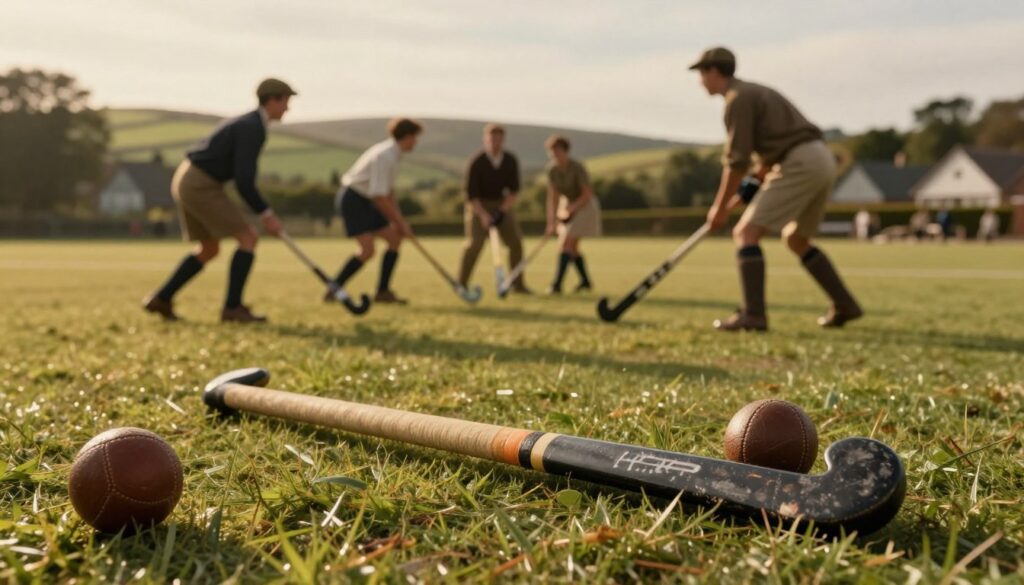
Traces of stick-and-ball contests stretch back thousands of years, even to ancient Egypt. Carvings from about 4000 years ago show teams using sticks to hit a projectile. That image links a distant past to the games you watch today.
By the 19th century, local pastimes began to split into separate forms. The first formal club for field play opened in 1849 at Blackheath, London. That club helped shape rules for the team sport now called field hockey.
The word “hockey” has unclear roots; some trace it to the Middle French hoquet. Across surfaces — grass or ice — players use a stick to move a ball or disk into a goal. Modern hockey sticks are made to give better control on each surface.
“Ancient scenes and Victorian clubs both taught us how the game would evolve.”
- The Blackheath club, 1849, formalized modern field play.
- Ancient carvings prove the game’s deep roots.
- Core play uses a stick to guide a ball or puck toward goal.
How Many Types of Hockey Are There in the World?
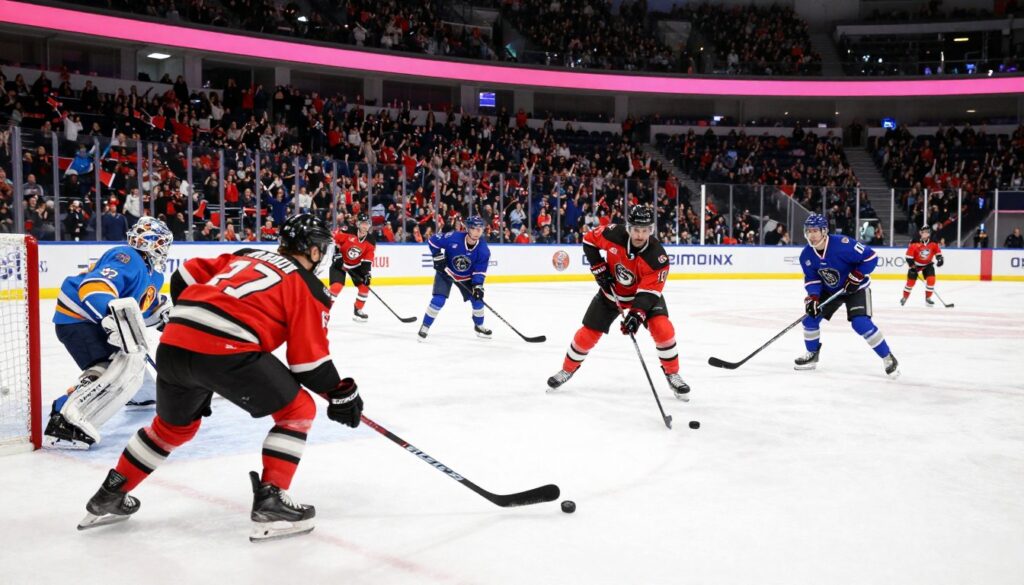
Across continents, the single word ‘hockey’ can mean very different games.
Global Terminology Differences
Where you live shapes the name you hear. In most countries, plain field hockey is the default meaning. In Canada and the U.S., people usually mean ice hockey.
The International Hockey Federation (FIH) governs field play on gravel, grass, or artificial turf. That setup is common across the world. Ice rinks and cold climates create a separate tradition in North America and parts of Europe.
The Core Mechanics of the Game
Every version keeps one clear goal: two teams use sticks to move a ball or puck into the opponent’s net. That basic rule ties field, rink, and floor play together.
- Ice hockey is fast and played by six players per team on a rink.
- Floor hockey runs indoors on a flat gym floor and uses a ball or puck.
- All these games depend on teamwork, quick passing, and skilled stick work.
Traditional Ice Hockey and Its Close Relatives
You’re likely to spot several frozen-surface games that share gear and skills.
Professional ice hockey grew from an early indoor match in Montreal on March 3, 1875. That game set rules that led to the pro circuit you see today.
The Stanley Cup arrived in 1892 and became the top prize for pro teams. That trophy still defines elite success and passion for the sport.
Origins and pro play
Modern leagues use a puck, skates, and tight rosters. Players move fast on a smooth rink. Goaltenders and full lines make this version intense and strategic.
Bandy and rink bandy
Bandy is a larger outdoor game played with a ball and eleven players per side. In Russia it’s often called Russian hockey.
Rink bandy adapts that ball game for smaller indoor rinks so players can train year round.
Pond hockey
Pond hockey is simple and social. Four players per team, no formal goalkeeper, and a focus on skating and puck control.
| Variation | Surface | Players | Object |
|---|---|---|---|
| Professional ice hockey | Indoor rink | 6 per side | Puck |
| Bandy | Large outdoor ice | 11 per side | Ball |
| Rink bandy | Indoor rink | 11 per side (adapted) | Ball |
| Pond hockey | Natural frozen water | 4 per side | Puck or rubber |
Field Hockey and Indoor Variations
A shift indoors created new rules, smaller surfaces, and tight, fast play.
Field hockey remains a major global sport played on grass or turf. It is India’s beloved game and a long-standing Olympic event since 1908. The International Hockey Federation (FIH) sets rules for both outdoor field hockey and indoor hockey to keep standards consistent.
Indoor hockey is a condensed version played on a smaller area. Solid side boards keep the ball in play. That design speeds up passing and rewards quick footwork and stick control.
Floorball began in the 1970s in Europe. It uses lightweight sticks on a gym floor and is now popular in over 50 countries. Ball hockey is another gym-based option; players use sticks and often a tennis ball instead of a puck.
- Field hockey: major international sport on turf or grass, first club 1849.
- Indoor hockey: smaller surface with side boards, ball stays live.
- Floorball & ball hockey: gym floor games using light sticks and a ball for fast play.
| Variation | Surface | Players | Object |
|---|---|---|---|
| Field hockey | Grass / Turf | 11 per team | Ball |
| Indoor hockey | Smaller indoor court | 6 per team (common) | Ball |
| Floorball | Gym floor | 5–6 per team | Plastic ball |
| Ball hockey | Gym floor | Varies by league | Tennis ball or street ball |
Roller and Street Hockey Variations
Wheels and asphalt brought lively, low-cost versions that you can try near local parks.
Inline hockey uses inline skates and moves fast on smooth surfaces. World Skate governs this form and runs the FIRS Inline Hockey World Championships. The International Inline Skater Hockey Federation also oversees ball-based play for leagues that favor a ball over a puck.
Inline Hockey Developments
Roller hockey, often called quad hockey, came before inline skates. It is played in over sixty countries and was shown at the 1992 Olympics as a demonstration sport.
Street hockey, or road hockey, keeps things simple. Players use minimal gear and play on asphalt. That makes it ideal for year-round practice where ice is scarce.
- Inline sledge hockey began in 2009 in Bisley, Surrey, enabling sit-down play on dry surfaces.
- Ball- and puck-based roller forms keep rules flexible for local leagues and parks.
| Variation | Surface | Typical Object | Notes |
|---|---|---|---|
| Inline hockey | Sport courts / rinks | Puck or ball | World Skate / FIRS championships |
| Roller (quad) hockey | Wood or asphalt | Ball or puck | Played in 60+ countries; Olympic demo 1992 |
| Street hockey | Asphalt | Ball | Casual play with minimal gear |
Adaptive and Para Hockey Sports
Adaptive formats expand access so more athletes can enjoy rink and gym play.
Para ice hockey (once called sledge hockey) is a fast, contact sport played on ice with players seated on sledges. It joined the Paralympic Winter Games in 1994. That step gave athletes with lower-body impairments a global stage.
Para Ice Hockey
Players use two short sticks for propulsion and puck control. Teams include a goaltender who uses adapted gear. The game keeps the pace and tactics fans expect from ice play.
Powerchair and Volt Hockey
Powerhockey brings team competition to athletes who use power wheelchairs. Matches focus on strategy, passing, and scoring.
Volt hockey is a 3 vs 3 indoor game. Players drive battery-operated chairs with a joystick. It helps competitors with limited mobility join fast, close contact play.
“Adaptive rules and gear turn familiar moves into new chances to compete.”
- Blind hockey uses a noise-making puck so visually impaired players can track play.
- Deaf hockey follows standard rules but relies on signed signals and visual cues.
- Many versions use sledges or chairs so the body stays stable while skills shine.
Unique and Regional Hockey Games
Local tastes gave birth to curious and lively variants you might not know about.
Ringette began in Canada in 1963. Sam Jacks created a game played on ice with a straight stick and a rubber ring. It is a fast team sport that rewards passing and tactics.
Broomball uses a ball on an ice rink but players wear rubber-soled shoes, not skates. That change makes play slower but very accessible to new players.
Beikou, or Daur Hockey, is a traditional game from Inner Mongolia. Villagers have played this team sport for centuries. It shows how stick games grew around culture and season.
Spongee is a Manitoba favorite. Players wear rubber boots and mix rules from broomball and ice hockey. It stays popular in cold Canadian communities.
- Air hockey is a fast table game played indoors on an air cushion.
- Showdown adapts table play for blind and visually impaired players.
- These regional forms join roller hockey, floor hockey, and ball hockey as local adaptations worldwide.
Conclusion
Whether on turf, court, or ice, the games share a simple goal and big heart.
From ancient roots to modern leagues, this guide shows how the family of stick sports grew across regions and seasons.
You explored classic ice play, field action, roller forms, and adaptive formats. Each version brings fresh rules and local color to the sport.
There is a match for every set of skill and interest. If you’re a new fan or a seasoned player, use this guide to pick a game to watch or try with friends.